If your car shakes at stoplights, idles unevenly, or feels like it might stall when you’re parked, you’re dealing with a rough idle. While several components can cause this issue, one of the most common — and often overlooked — culprits is a dirty or malfunctioning throttle body. Rough Idle? Your Throttle Body Might Be the Problem
Let’s break down why this happens, how to diagnose it, and what you can do to fix it.
🚗 What Is a Rough Idle?
A rough idle occurs when your engine doesn’t run smoothly while the vehicle is stationary. You may notice:
- Engine vibrations
- RPMs fluctuating up and down
- Stalling at stops
- Hesitation when accelerating
- Check engine light
When everything is working properly, your engine should maintain a steady idle speed (usually between 600–1,000 RPM depending on the vehicle). Rough Idle? Your Throttle Body Might Be the Problem
🔧 What Does the Throttle Body Do?
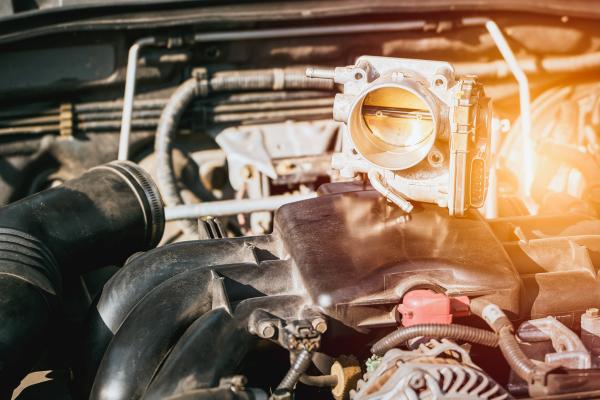
The throttle body controls how much air flows into your engine. When you press the gas pedal, the throttle plate opens to allow more air in. At idle, it stays slightly open to maintain a stable engine speed.
Modern vehicles use electronic throttle control (drive-by-wire) systems, meaning sensors and motors regulate airflow instead of a traditional cable.
When carbon buildup restricts airflow or interferes with the throttle plate, the engine struggles to maintain the correct air-fuel mixture — leading to rough idle symptoms.
⚠️ How a Dirty Throttle Body Causes Rough Idle
Over time, carbon deposits and oil vapors (from the PCV system) accumulate around:
- The throttle plate
- The throttle bore
- Idle airflow passages
This buildup can cause:
- Restricted airflow at idle
- Sticky throttle plate movement
- Incorrect sensor readings
- Improper air-fuel ratio
The result? Unstable idle and poor engine performance.
🛑 Other Signs It’s the Throttle Body
If the throttle body is the issue, you may also notice:
- Sluggish throttle response
- Reduced fuel economy
- Stalling when coming to a stop
- Hesitation during acceleration
- Check engine light with throttle-related codes
In some vehicles, like the Chevrolet Silverado 1500 and Honda Civic, electronic throttle bodies are known to accumulate carbon buildup that affects idle stability over time.
🔍 How to Confirm the Throttle Body Is the Problem
Before replacing expensive parts, try this:
1. Inspect for Carbon Buildup
Remove the air intake tube and visually check inside the throttle body. Heavy black deposits around the plate are a strong indicator.
2. Scan for Trouble Codes
Use an OBD-II scanner to check for codes like:
- P0121
- P0505
- P2111
- P2112
These can indicate throttle position or idle control issues.
3. Rule Out Other Common Causes
Rough idle can also be caused by:
- Vacuum leaks
- Dirty fuel injectors
- Faulty spark plugs
- Bad ignition coils
- Failing MAF sensor
If those components check out, the throttle body becomes a prime suspect.
🧼 The Fix: Clean the Throttle Body
In many cases, simply cleaning the throttle body restores smooth idle.
Basic steps include:
- Disconnect the battery.
- Remove the intake tube.
- Spray throttle body cleaner onto a microfiber cloth.
- Gently clean the throttle plate and bore.
- Reassemble and allow the engine to relearn idle.
Cleaning is inexpensive and often solves the issue without replacing parts.
🔁 When Cleaning Isn’t Enough
If rough idle persists after cleaning, you may be dealing with:
- A failing throttle position sensor (TPS)
- Internal electronic motor failure
- Wiring issues
- A required throttle body relearn procedure
In those cases, replacement or professional diagnostics may be necessary.
⏱ How Often Should You Clean It?
Most experts recommend cleaning the throttle body every 30,000–50,000 miles, or sooner if you experience:
- Rough idle
- Hesitation
- Inconsistent RPMs
Preventative maintenance can save you from costly repairs later.
💡 Pro Tip: Don’t Ignore Rough Idle
Ignoring a rough idle can lead to:
- Increased fuel consumption
- Engine misfires
- Catalytic converter damage
- Unexpected stalling
Addressing the issue early keeps your engine running smoothly and efficiently.
🏁 Final Thoughts
If your car is idling rough, don’t jump straight to expensive repairs. A dirty throttle body is a common, affordable, and fixable cause. A simple inspection and cleaning could restore smooth performance in under an hour.
If the problem continues after cleaning, then it’s time to dig deeper — but starting with the throttle body is often the smartest move.