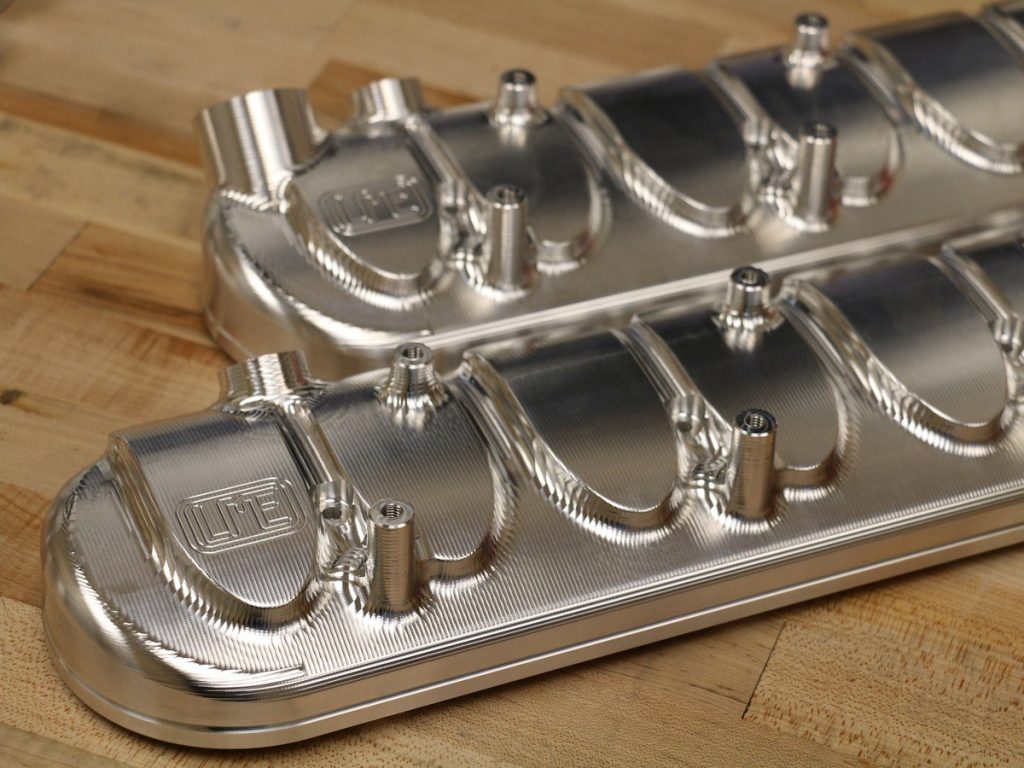
When it comes to performance engines and custom builds, every detail counts — and billet valve covers are one of those parts that not only serve a functional purpose but also add serious aesthetic appeal. But what exactly are billet valve covers, and why do they matter in the world of high-performance automotive builds?
Let’s break it down.
What Are Billet Valve Covers?
Billet valve covers are engine valve covers that are CNC-machined from a solid block (or “billet”) of aluminum. Unlike cast aluminum or stamped steel valve covers — which are made by pouring molten metal into a mold or pressing sheet metal — billet covers are cut with precision tools to exact tolerances.
The result? A high-strength, ultra-clean, and often highly detailed component that’s made to last.
Key Benefits of Billet Valve Covers
1. Strength and Durability
Billet aluminum is significantly stronger than cast or stamped materials. Because it’s machined from a single piece, there are no weak points or porous areas — which are common in cast parts. This makes them ideal for high-horsepower, high-heat applications like drag racing, off-roading, or boosted builds.
2. Precision Fitment
CNC machining ensures extremely tight tolerances. That means billet valve covers fit better, seal better, and are less likely to warp or leak over time. For performance enthusiasts, that’s a major win — especially in engines that see regular abuse.
3. Customization and Style
Let’s be honest: they look awesome. Whether polished, anodized, or powder-coated, they bring a premium finish to your engine bay. Many companies offer custom engraving, logos, or designs that let builders personalize their ride down to the smallest detail.
4. Better Sealing and Performance
Because of the rigidity and precision fit, they often help reduce oil leaks and blow-by issues. Some also come with integrated baffling for improved crankcase ventilation, or extra clearance for high-lift camshafts and aftermarket valvetrain components.
Who Needs Them?
While they look great on any build, billet valve covers are especially useful in:
- High-performance engines – Where temperature and stress are higher than factory tolerances.
- Boosted applications – Turbocharged and supercharged engines often need stronger components.
- Race cars and hot rods – Where both performance and visual appeal are critical.
- Show cars – Where billet covers help elevate the engine bay presentation.
Billet vs. Cast vs. Stamped Valve Covers
| Feature | Billet Aluminum | Cast Aluminum | Stamped Steel |
|---|---|---|---|
| Strength | ★★★★★ | ★★★☆☆ | ★★☆☆☆ |
| Weight | ★★★★☆ | ★★★☆☆ | ★★★★★ |
| Aesthetics | ★★★★★ | ★★★★☆ | ★★☆☆☆ |
| Cost | $$$$ | $$$ | $$ |
| Customization | ★★★★★ | ★★☆☆☆ | ★☆☆☆☆ |
Billet covers are a higher-end choice, but the benefits in performance, longevity, and appearance often justify the price.
Why They Matter
In a world where performance and reliability go hand-in-hand, they provide more than just good looks. They offer:
- Improved durability for aggressive builds
- Better sealing and reduced oil leaks
- Enhanced under-hood appearance
- Customization that reflects your build’s personality
Whether you’re building a 1,000hp street monster or a clean weekend cruiser, they show that you’re serious — about performance, precision, and presentation.
Final Thoughts
Upgrading to they might seem like a small detail, but in the world of performance and custom builds, the details matter. They’re a simple, effective way to increase reliability while giving your engine bay a high-end, finished look.
So if you’re tired of leaky gaskets, warped covers, or just want to bring a polished look to your build, they are more than worth the investment.