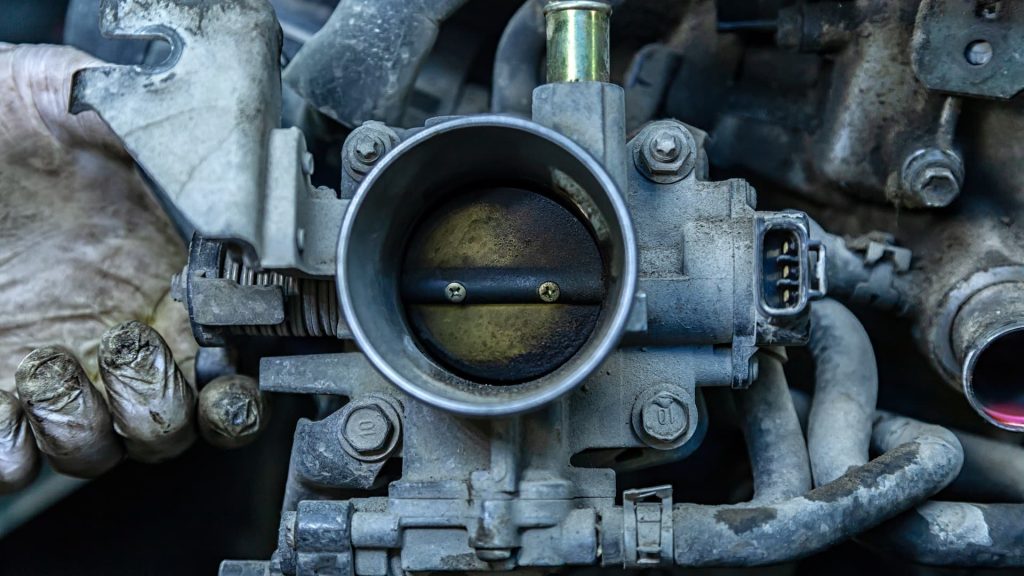
A dirty throttle body can cause rough idle, hesitation, poor throttle response, and even a check engine light. The good news? Cleaning it is a straightforward DIY job that can restore smooth performance in under an hour.
This step-by-step guide will walk you through everything you need to know.
🔧 What Is a Throttle Body and Why Clean It?
The throttle body controls how much air enters your engine when you press the gas pedal. Over time, carbon deposits, dirt, and oil vapors build up around the throttle plate and bore.
When buildup gets heavy, you may notice:
- Rough or unstable idle
- Sluggish acceleration
- Stalling at stoplights
- Reduced fuel efficiency
- Check engine light
Regular cleaning helps maintain proper airflow and smooth throttle response.
🛠 Tools & Supplies You’ll Need
- Throttle body cleaner (specifically labeled for throttle bodies)
- Clean microfiber cloths
- Soft-bristle brush (optional)
- Screwdriver or socket set
- Gloves and safety glasses
⚠️ Important: Do NOT use carburetor cleaner unless your vehicle specifically allows it. Many modern electronic throttle bodies are sensitive to harsh solvents.
🚗 Step 1: Locate the Throttle Body
- Turn off the engine and let it cool.
- Open the hood.
- Locate the air intake tube connected to the engine.
- Follow the intake tube to where it meets a metal housing — this is the throttle body.
In most modern vehicles, this housing contains an electronic throttle plate (drive-by-wire system).
🔌 Step 2: Disconnect the Battery (Recommended)
Disconnecting the negative battery terminal helps:
- Prevent triggering a check engine light
- Reset idle learning after cleaning
- Protect electronic throttle components
Use a wrench to remove the negative cable and set it aside safely.
🔄 Step 3: Remove the Air Intake Tube
- Loosen the clamps securing the intake tube.
- Gently remove the tube from the throttle body.
- Set it aside carefully.
You should now see the throttle plate inside the bore.
🧼 Step 4: Clean the Throttle Body
For Electronic Throttle Bodies (Most Modern Cars)
- Spray throttle body cleaner onto a microfiber cloth (not directly into the throttle body).
- Gently wipe carbon buildup from:
- The throttle plate
- The inside walls (bore)
- If needed, carefully open the throttle plate by hand to clean behind it.
⚠️ Do not force the plate aggressively. Be gentle.
For Cable-Operated Throttle Bodies
You can manually open the throttle plate by moving the linkage and clean both sides thoroughly.
🧽 Step 5: Remove Stubborn Carbon
If buildup is heavy:
- Use a soft brush lightly.
- Continue wiping until the surface looks metallic and clean.
- Avoid excessive scrubbing.
The goal is to remove carbon without damaging the throttle plate coating.
🔁 Step 6: Reassemble Everything
- Reinstall the air intake tube.
- Tighten clamps securely.
- Reconnect the battery.
Double-check all connections before starting the engine.
🚘 Step 7: Perform Idle Relearn (If Needed)
After cleaning, your engine may idle high or fluctuate temporarily.
Most vehicles relearn automatically by:
- Starting the engine.
- Letting it idle for 5–10 minutes.
- Driving normally for 10–15 minutes.
Some vehicles may require a specific throttle body relearn procedure (check your service manual).
⏱ How Often Should You Clean a Throttle Body?
- Every 30,000–50,000 miles (recommended range)
- Sooner if you notice symptoms
- More frequently if you drive in dusty conditions
❓ Common Mistakes to Avoid
- ❌ Spraying cleaner directly into electronic throttle bodies
- ❌ Using carburetor cleaner on coated throttle plates
- ❌ Forcing the throttle plate open aggressively
- ❌ Skipping the idle relearn process
💡 Pro Tips
- Cleaning the Mass Air Flow (MAF) sensor at the same time can improve results (use MAF cleaner only).
- If rough idle persists, consider checking for vacuum leaks.
- A heavily contaminated throttle body may indicate excessive PCV oil vapor buildup.
🏁 Final Thoughts
Cleaning your throttle body is one of the easiest ways to restore lost throttle response and smooth out idle issues. It’s inexpensive, requires minimal tools, and can make your car feel noticeably more responsive.
If symptoms continue after cleaning, the throttle body may need recalibration or replacement — but in most cases, a simple cleaning does the trick.