
Introduction
When it comes to performance parts for vehicles, the choice between CNC billet and cast components can significantly impact your engine’s performance, durability, and cost. Both manufacturing processes have their strengths and weaknesses, making it essential to understand their differences to make an informed decision. In this article, we’ll compare CNC billet and cast parts to help you determine which option is best for your needs. CNC Billet vs. Cast Parts
Understanding CNC Billet Parts
What Are CNC Billet Parts?
CNC (Computer Numerical Control) billet parts are crafted from a solid block of material, typically aluminum, steel, or titanium. The process involves precision machining where a computer-controlled tool removes material to create the final component. This method ensures high accuracy and allows for intricate designs and tight tolerances.
Advantages of CNC Billet Parts
- Precision and Accuracy: CNC machining delivers exact dimensions and tolerances, ensuring high performance and fitment.
- Strength and Durability: The solid block construction of billet parts provides superior strength and resistance to stress compared to cast components.
- Customization: CNC machining allows for custom designs tailored to specific performance needs, such as optimized airflow or enhanced structural integrity.
- Consistency: Billet parts offer consistent quality and performance due to the precision of the machining process.
Disadvantages of CNC Billet Parts
- Cost: The manufacturing process is more expensive due to the high level of precision and material waste.
- Production Time: CNC machining can take longer compared to casting, especially for complex designs.
Understanding Cast Parts
What Are Cast Parts?
Cast parts are made by pouring molten metal into a mold to form the desired shape. Once the metal cools and solidifies, the part is removed from the mold and finished. Common materials for casting include aluminum, iron, and steel.
Advantages of Cast Parts
- Cost-Effective: Casting is generally less expensive than CNC machining due to lower material costs and faster production times.
- Rapid Production: The casting process can produce large quantities of parts quickly, making it ideal for mass production.
- Material Versatility: Casting can accommodate a wide range of metals and alloys, allowing for diverse applications.
Disadvantages of Cast Parts
- Lower Precision: The casting process may result in less precise dimensions and tolerances compared to CNC machining.
- Strength Limitations: Cast parts may be less strong and durable due to potential internal defects, such as air pockets or inconsistent material density.
- Limited Customization: Custom designs are more challenging to achieve with casting, as molds are needed for each new design.
Comparing CNC Billet and Cast Parts
Strength and Durability
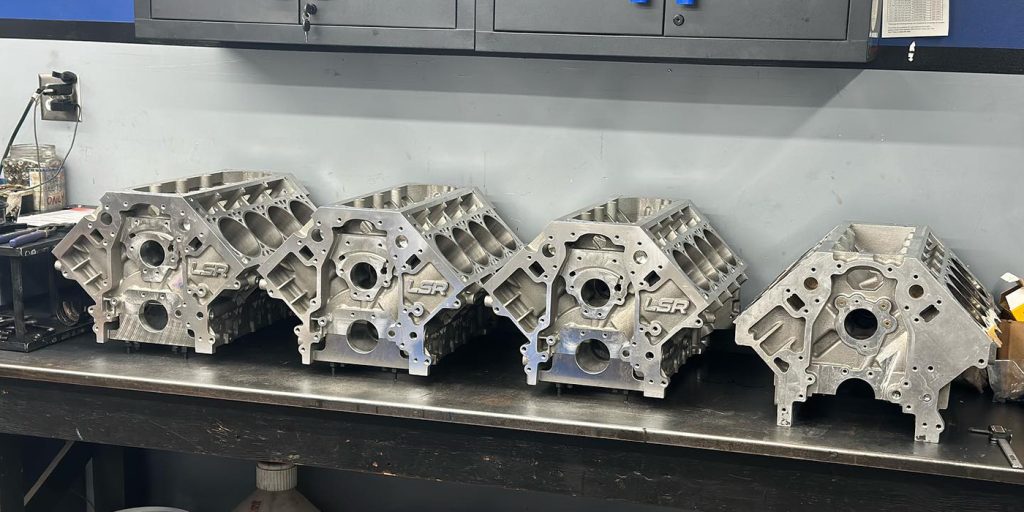
CNC billet parts typically outperform cast parts in terms of strength and durability. The solid block construction and precision machining of billet parts result in fewer weaknesses and better resistance to high stresses and extreme conditions. Cast parts, while generally strong, may have internal defects that can affect their performance and longevity.
Precision and Accuracy
When it comes to precision and accuracy, CNC billet parts have the upper hand. CNC machining provides exact dimensions and tight tolerances, which are crucial for high-performance applications. Cast parts, on the other hand, may have slight variations and less consistent tolerances due to the nature of the casting process.
Cost and Production
Casting is usually more cost-effective and faster for producing large quantities of parts. It is ideal for applications where precision is less critical, and cost is a primary concern. CNC billet parts, while more expensive, offer greater precision and customization, making them suitable for high-performance or specialized applications.
Customization and Design
CNC billet parts excel in customization and complex design capabilities. The flexibility of CNC machining allows for intricate designs and specific performance enhancements. Cast parts have limitations in design complexity and are less adaptable to custom modifications.
Conclusion
Choosing between CNC billet and cast parts depends on your specific needs and priorities. CNC billet parts offer superior strength, precision, and customization, making them ideal for high-performance and specialized applications. Cast parts, while more cost-effective and suitable for mass production, may lack the precision and durability required for demanding conditions. By understanding the differences between these manufacturing processes, you can make an informed decision that aligns with your performance goals and budget. CNC Billet vs. Cast Parts