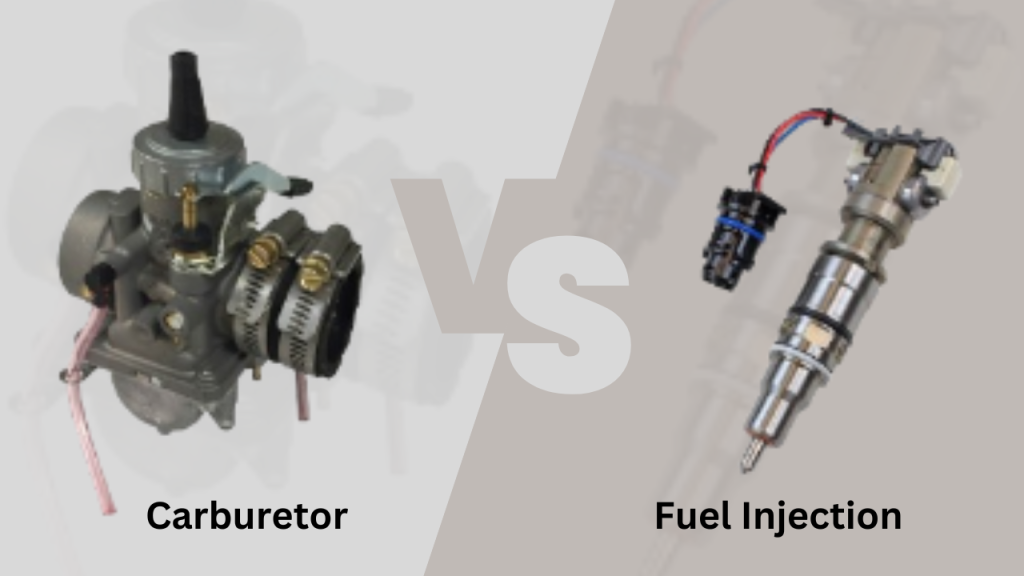
When it comes to delivering fuel to an engine, two main systems have been used over the years: carburetors and fuel injection. Both serve the same basic purpose—to mix fuel with air for combustion—but they do it in very different ways. Here’s a simple comparison to help you understand how each system works and their pros and cons. Carburetors vs. Fuel Injection
What Is a Carburetor?
A carburetor is a mechanical device that mixes air and fuel before sending it to the engine’s cylinders. It uses vacuum pressure to draw fuel into the airflow through a narrow passage called a venturi, creating the proper fuel-air mixture needed for combustion.
Carburetors were widely used in cars until the late 1980s and early 1990s. They are relatively simple and inexpensive but require manual adjustments and can be less efficient in fuel delivery.
What Is Fuel Injection?
Fuel injection is a more modern system that delivers fuel directly into the engine’s intake manifold or combustion chamber using electronically controlled injectors. Sensors monitor engine conditions such as temperature, speed, and air pressure to precisely control the amount of fuel injected.
Fuel injection became common in vehicles starting in the late 1980s and is now standard in nearly all modern cars because of its precision and efficiency.
Key Differences
| Aspect | Carburetor | Fuel Injection |
|---|---|---|
| Fuel Delivery | Mechanical, vacuum-based mixing | Electronic, computer-controlled |
| Efficiency | Less efficient, higher emissions | More efficient, cleaner emissions |
| Maintenance | Requires manual tuning and cleaning | Mostly self-adjusting, less frequent maintenance |
| Cold Starts | Can be difficult and require choke | Easier and smoother cold starts |
| Performance | Less precise fuel delivery | Precise fuel delivery improves power and response |
| Cost | Cheaper to manufacture | More complex, higher initial cost |
Advantages of Carburetors
- Simpler design, easier to repair by hand
- Lower upfront cost
- Familiar to classic car enthusiasts and mechanics
Advantages of Fuel Injection
- Better fuel economy and lower emissions
- Improved engine performance and reliability
- Automatic adjustments for different driving conditions
Which Is Better?
For modern vehicles, fuel injection is clearly the winner due to its efficiency, performance, and ease of use. However, carburetors still hold a special place in classic cars, motorcycles, and some racing setups where simplicity and manual tuning are preferred. Carburetors vs. Fuel Injection
Final Thoughts
Understanding the difference between carburetors and fuel injection helps you appreciate how fuel delivery technology has evolved. Whether you drive a vintage car or a modern vehicle, knowing how your fuel system works can help you maintain and enjoy your ride better.