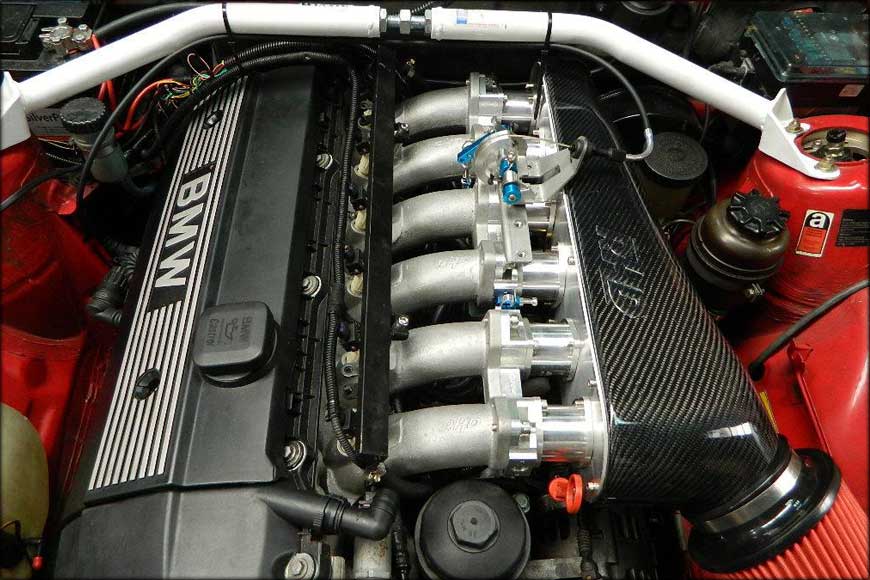
When it comes to engine performance, airflow is king. The throttle body—responsible for regulating how much air enters your engine—is a critical component that directly affects horsepower, torque, and throttle response. For performance enthusiasts, one of the most common questions is: “Should I go big or stick with a small throttle body?”
In this article, we’ll break down the differences between big and small throttle bodies, the advantages and trade-offs of each, and how to choose the right one for your engine.
What Is a Throttle Body?
Before diving into sizes, it’s important to understand what a throttle body does. Essentially, it’s a valve that controls airflow into the engine’s intake manifold. Modern cars with drive-by-wire systems use an electronic throttle body, while older vehicles rely on a mechanical linkage.
The throttle body’s size determines how much air can flow into the engine at full throttle:
- Smaller throttle bodies restrict airflow slightly, prioritizing low-end torque and smooth drivability.
- Larger throttle bodies allow more airflow, supporting higher horsepower at high RPMs but sometimes sacrificing low-speed response.
Small Throttle Bodies: Pros and Cons
Pros:
- Better Low-End Torque: Small throttle bodies provide stronger response at low RPMs, making them ideal for street-driven cars.
- Smooth Driveability: They deliver predictable throttle control, reducing jerky acceleration.
- Easier to Tune: Smaller units are generally more forgiving when paired with stock components.
Cons:
- Airflow Limitation at High RPMs: As engine speed increases, a small throttle body can become a bottleneck, limiting peak horsepower.
- Less Aggressive Performance Feel: Enthusiasts may notice a “constrained” sensation during spirited driving or racing conditions.
Big Throttle Bodies: Pros and Cons
Pros:
- Higher Airflow Capacity: Larger throttle bodies allow more air into the engine, which can increase horsepower at higher RPMs.
- Improved High-End Performance: Perfect for turbocharged, supercharged, or heavily modified naturally aspirated engines.
- Aggressive Throttle Response: Makes the engine feel livelier and more responsive when paired with supporting mods.
Cons:
- Reduced Low-End Torque: Big throttle bodies can feel less responsive at low RPMs, sometimes causing hesitation in city driving.
- Potential Driveability Issues: Without proper tuning, larger units can cause rough idling or throttle surges.
- Requires Supporting Mods: To get the most benefit, a big throttle body often needs a high-flow intake, exhaust, and ECU tuning.
How to Choose the Right Size for Your Engine
Selecting the right throttle body depends on your goals, driving style, and engine setup:
- Street/Everyday Driving: Stick with a small or moderately sized throttle body. It maintains smooth drivability, strong low-end torque, and requires minimal tuning.
- Performance/Track Cars: A larger throttle body makes sense for high-RPM performance, forced induction setups, or extensively modified engines.
- Engine Type and Displacement: Larger engines can handle bigger throttle bodies without losing low-end torque, whereas smaller engines may suffer from drivability issues with an oversized unit.
- Supporting Modifications: Consider your intake, exhaust, and ECU tuning. Big throttle bodies shine when paired with complementary upgrades.
Installation and Tuning Considerations
- Sensor Compatibility: Ensure your throttle position sensor (TPS) and idle air control (IAC) work properly with the new size.
- ECU Calibration: Larger throttle bodies often require tuning to optimize fuel delivery and prevent error codes.
- Airflow Matching: Avoid creating a bottleneck elsewhere in the intake system—upgrading the throttle body alone may not yield full benefits.
Realistic Expectations
- Small Throttle Bodies: Provide excellent daily drivability, reliable low-end torque, and smooth response—ideal for most street cars.
- Big Throttle Bodies: Offer noticeable high-RPM power gains and an aggressive feel but may require tuning and supporting mods to avoid drivability issues.
The key is balancing your engine’s airflow needs with your driving style. Bigger isn’t always better, and smaller doesn’t mean weak—it’s about matching your throttle body to your goals.
Conclusion
Choosing between a big or small throttle body comes down to your engine setup and driving priorities. Small throttle bodies excel at street drivability and low-end torque, while big throttle bodies unlock high-RPM performance and horsepower potential. Understanding the trade-offs—and pairing your choice with proper tuning—ensures your engine performs exactly the way you want it.